Introduction to Yachting / Module 2: Yacht Departments and Career Options

Lesson 1: The chain of command starts with the Captain


Who holds the highest authority on board?


OBJECTIVE

This lesson discusses:

  1. The chain of command and departmental hierarchy.
  2. The role of a captain.
  3. What further career opportunities exist for captains?

The chain of command

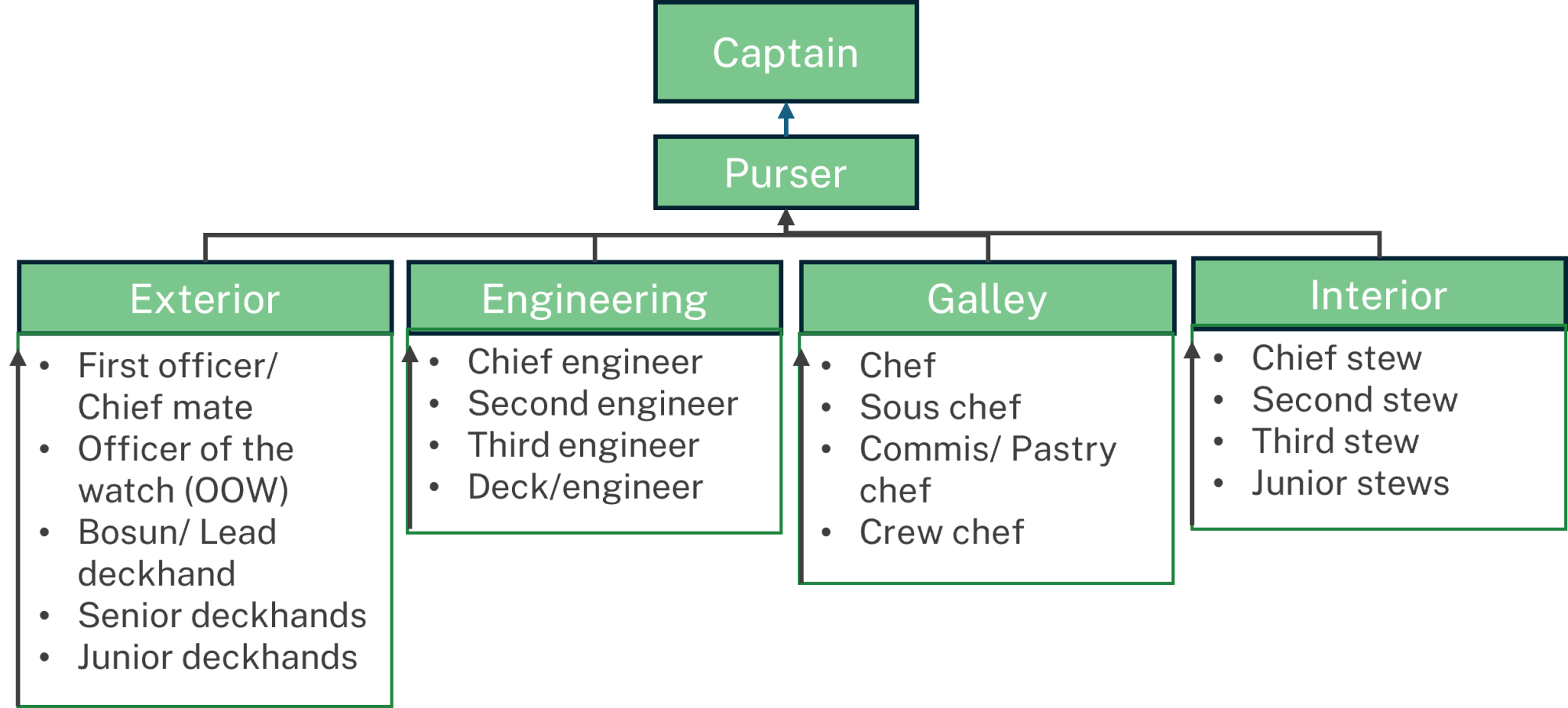
The chain of command is in place to ensure the safe running of the vessel. It details who gives instructions and the reporting hierarchy within and between departments. All crew must adhere to the chain of command and follow instructions on board a vessel. Not only your life, but also the lives of fellow crew members and passengers, could depend on this.


Command structure on a yacht.


The degree of formality on a vessel can vary from boat to boat. A boat that is less formally run does not mean the standards of service, order, and organisation are lower. It merely means that the Captain’s management styles differ.

The number of roles for each department depends on the size of the vessel. A small yacht will not need each role and rank, whereas a giga yacht or a cruise liner will have multiple crews assigned to each role.


Ways to identify position and rank in the chain of command

Crew rank and position on a yacht can be indicated using epaulettes. These are the little tags on the shoulder of a uniform shirt or blazer. The number of bars and the image (emblem) on an epaulette indicate the seniority of the post within a specific department, as indicated by the symbol.


Learning Activity: Understand position and rank


Use the epaulette system to identify rank and treat the person with appropriate respect.

Take note: Epaulettes are a traditional way of indicating rank, but not all vessels utilise this in their uniforms these days.


The Captain’s role

The rank of captain is denoted by four gold bars with an anchor on the epaulettes.

The captain has total responsibility for the vessel, its safety and that of everyone on board. He or she is in charge of the day-to-day running of the vessel and oversees all operations, including all aspects of safety, seamanship and human resources. The rank of the captain is signified on the epaulettes by the anchor image and four gold bars.

The captain should have a thorough working knowledge of every department on the vessel under their command. Depending on the formality, the crew may be required to address the Captain as Captain, Captain John, or Captain Jessica or simply by their first names, John or Jessica.


Career opportunities

How to become a captain

The captain is the highest-ranking officer onboard the yacht. Captains typically have extensive maritime experience and hold relevant certifications. To advance as a captain you need to gain experience as a mate or officer on smaller vessels before assuming command of larger yachts.

Once you are a captain

Yachting captains have a wide range of career opportunities both within and beyond the industry, due to their leadership experience, technical knowledge, and operational expertise.


In the maritime industry Maritime-related industry

Captain of progressively larger yachts

Progress to captaining 60 m or 100 m vessels, often with higher salaries and more complex operations.

Maritime trainer or examiner

Teach and certify upcoming crew and captains through various organizations.

Fleet captain or management captain

Oversee multiple vessels owned by the same individual or company; act as a liaison with management firms and shipyards.

Marine surveyor or auditor

Conduct vessel inspections, compliance checks, or ISM/ISPS audits.

Delivery captain or relief captain

Focus on yacht deliveries or temporary assignments, allowing for flexibility and travel.

Brokerage or yacht sales consultant

Leverage industry connections to transition into yacht brokerage or new-build sales.

Yacht management (shore-based)

Join a yacht management company as operations manager, compliance officer, or safety/security advisor.

Shipyard or refit project manager

Manage complex builds or refits, coordinating between the owner, contractors, and shipyard teams.


Learning Activity: Leadership under extreme pressure


SUMMARY

In this lesson, we unpacked:

  1. The chain of command and how to identify the department and rank by examining the epaulettes worn by each crew member.
  2. The captain's responsibilities include understanding how each department operates and making strategic and safety decisions that benefit the entire vessel.
  3. Career paths to become a captain, and opportunities once you are a captain.


How many stripes does a Captain’s epaulettes have?