
Introduction to Yachting / Module 2: Yacht Departments and Career Options
Lesson 4: Galley Department
|

|
Where does all the wonderful food come from?
|
OBJECTIVE
In this lesson you learn about the galley department and how the hierarchy is structured. We outline the tasks that each role performs and some career opportunities for a chef
in the yachting industry.
The galley department
The galley department is responsible for all food-related operations, ensuring high-quality meals are prepared and served to guests and crew. Under the leadership of the head
chef, this team manages menu planning, provisioning, food preparation, and galley hygiene.
The galley plays a vital role in maintaining crew morale and delivering an exceptional dining experience for guests.
|

|
Planning
The chef/crew chef is responsible for provisioning the yacht (stocking supplies), as well as preparing and cooking meals for both guests and crew.
Chefs, like engineers, are in high demand. They are expected to consistently deliver exceptional meals regardless of weather conditions, time of day, or how far the yacht is
from shore. Each group of guests may have unique preferences or dietary requirements, and the chef must be able to adapt menus accordingly to meet these individual needs.
|
Some examples include:
- Specific food allergies, such as nut or fish allergies.
- Dietary preferences like vegetarian or gluten-free diets.
- Personal preferences like “don’t cook with garlic or don’t use sugar.
|

|
Provisioning
Provisioning on a vessel refers to the process of sourcing, ordering, and stocking all the necessary supplies needed for a trip. This ensures the vessel is fully equipped to
meet guest preferences and dietary needs for the duration of the trip. It is especially important to provision well, when you are far from ports or in remote locations.
Hygiene
Keeping the galley clean is very important to ensure that food is safe and everyone stays healthy. Because the space is small and busy, the crew must follow strict cleaning
rules all the time. This means the crew must regularly wipe down surfaces, store food properly to avoid contamination and clean tools and equipment daily. The team must also
follow food safety guidelines, dispose of waste correctly, and check that fridges and freezers are at the correct temperatures to keep food fresh.
You will learn more about planning, provisioning and hygiene in the Yacht Galley Course.
Qualifications
A chef must know the way around the galley and have sufficient culinary training and kitchen experience to manage efficiently. Preparing food requires planning, patience, a
good knowledge of different food types and combinations to provide guests and staff with interesting, nutritious and balanced meals.
A chef onboard a superyacht should have:
- Basic training in STCW95 or STCW2010,
- An ENG1 medical certificate, and
- Any additional marine training is always beneficial.
You may not need formal culinary qualifications/certifications if you have enough experience, although you will find better opportunities as a trained chef.
As a chef, you must be capable of working on your own under pressure.
|
!
|
Roles
The galley crew reports directly to the head chef, who assigns roles according to the number of staff, skills, and experience in the galley. On vessels smaller than 50m, the
galley has only one position - the chef. This means the solo chef is responsible for every aspect of the galley and food preparation.
Below, we explain the structure of the galley department for vessels with a large crew.
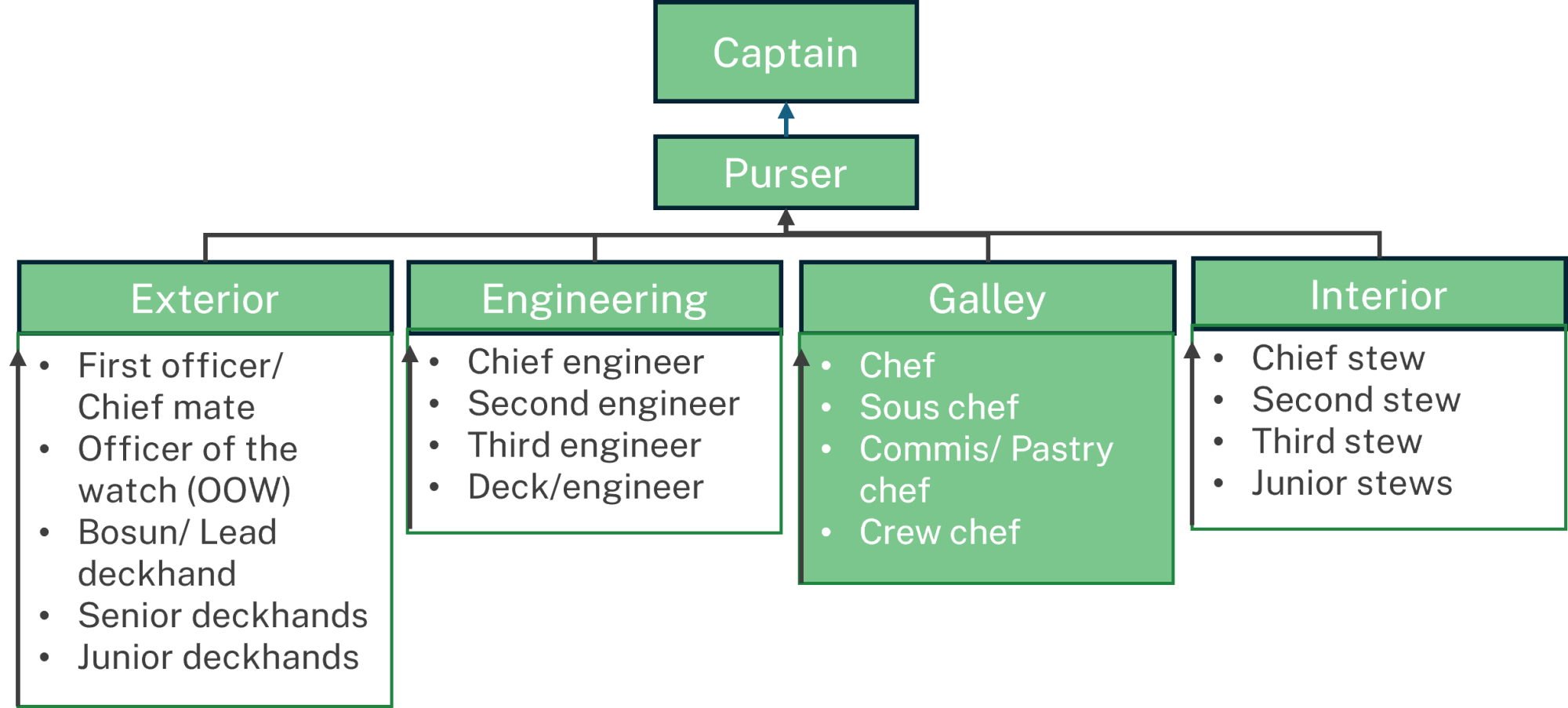
Command structure on a yacht – focus on the Galley department.
Head Chef
|

|
The head chef position is the only role in luxury yachts in which you can enter
the industry as a senior crew person without any prior maritime experience. The chef reports to the purser, first officer or captain. The chef also works very closely with the
chief stewardess to coordinate mealtimes for the guests and/or crew. The chef is responsible for purchasing all food on board the vessel (provisioning), planning and preparing all
meals for guests and crew and maintaining hygiene standards.
The rank of head chef is denoted by four silver bars with a knife and fork on the epaulettes.
|
Sous Chef
|

|
Larger vessels (over 50m) often employ a sous chef to support the head chef. A
sous chef is the second-in-command in the kitchen, working directly under the head chef. The word "sous" means "under" in French, which reflects their supporting role. On a yacht
or in any professional kitchen, the sous chef is key in ensuring smooth kitchen operations.
The rank of sous chef is denoted by three silver bars with a knife and fork on the epaulettes.
|
Pastry Chef or Crew Chef
|

|
The pastry chef is responsible for preparing and baking a wide range of desserts
and sweet treats based on existing and newly created recipes. They also oversee ingredient inventory, ensure the proper functioning of kitchen equipment, and uphold cleanliness
and safety standards.
In 2017, it became mandatory to have a crew chef/cook for any vessel with more
than ten crew members. Many larger vessels with crews of thirty or forty crew members will have more than one crew chef aboard. The crew chef is responsible for preparing daily
meals for crew members aboard a vessel and supporting the head chef when extra hands are required.
The rank of pastry or crew chef is denoted by two silver bars with a knife and fork on the
epaulettes.
|
Galley Assistant
|

|
The galley assistant has the lowest rank in the galley and performs work that is
assigned by the head chef. This role focuses on maintaining cleanliness, assisting with food preparation, and ensuring smooth kitchen operations.
The rank of galley assistant is denoted by one silver bar with a knife and fork on the epaulettes.
|
Career opportunities
As a chef, you can transfer your skills from land into the galley and back onto land with relative ease. You can work your way up in the galley hierarchy and then transfer
these skills to a land-based career.
| Onboard opportunities |
Land-based opportunities |
|
Head chef on larger yachts
Move up to larger vessels with bigger teams and more complex menus and specialization in different cuisines.
|
Private or estate chef
Cook for high-net-worth individuals or families in their homes or holiday properties.
|
|
Private chef for yacht owners
Transition into working full-time for the yacht owner, either at sea or at their private residences.
|
Culinary consultant
Advise yacht crews, owners, or businesses on kitchen setup, provisioning, and menu planning.
|
|
Charter yacht specialist
Work on high-end charter yachts known for exclusive, personalized guest experiences.
|
Restaurant owner
Use your experience to open and run a successful food business.
|
|
Fleet or relief chef
Travelling between yachts as a fill-in or rotating chef offers flexibility and variety.
|
Culinary instructor
Teach at a cooking school or train other chefs preparing for yacht or hospitality roles.
|
Galley assistant to head chef
To work your way up from a galley assistant, you must first master the role, then obtain relevant certifications and qualifications to progress to the crew chef/sous chef
level. Next, you must gain experience and build a strong portfolio with specialisations in different cuisines. Once you have the confidence to run a galley independently, you can
apply for solo or head chef roles.
Head chef on larger vessels
Once you achieve a head chef position you should continue to learn new skills and gain experience in leading progressively larger teams. Networking with other chefs, attending
industry events and staying ahead of new dietary trends will help you develop a good reputation. Combine this with leadership and management training to ensure your future
success.
Learning Activity: Galley line-up
Each chef plays a key role depending on the size and purpose of the yacht. Can you group them with the correct epaulettes and duties? Let’s see who’s plating what!
|
SUMMARY
In this lesson, we have covered:
- The activities that a galley department performs, including provisioning, cooking, cleaning and ensuring hygiene standards.
- The responsibilities of each role.
- How you can progress to become a head chef and what opportunities there are to develop your career as a chef.
|


