
Introduction to Yachting / Module 2: Yacht Departments and Career Options
Lesson 5: Interior Department
|

|
Interior - the heart of hospitality at sea.
|
|
OBJECTIVE
The objective of this lesson is to teach you about the interior department structure, hierarchy and roles. Learn how to build a successful career in the interior department and
understand what the role demands.
|
Interior department
The interior department is responsible for delivering exceptional hospitality, comfort, and guest service on the vessel. This team ensures that every detail, from housekeeping
and laundry to table service and cocktail presentation, is carried out to the highest standards. The chief steward/ess leads the team to create a luxurious atmosphere and a
memorable guest experience.
Roles
On many yachts, especially mid-sized ones, the purser role is often combined with that of the chief steward or stewardess (commonly referred to as a "stew"). This lesson covers
both roles in the interior department.
Depending on the size of the vessel, the department is led either by a dedicated purser, a chief stew, or a dual-role purser/chief stew. In terms of uniform, this rank is
typically represented by three silver bars alongside the distinctive “service with a smile” emblem.
The purser role is often combined with the chief stewardess role, so this lesson on the interior department covers it.
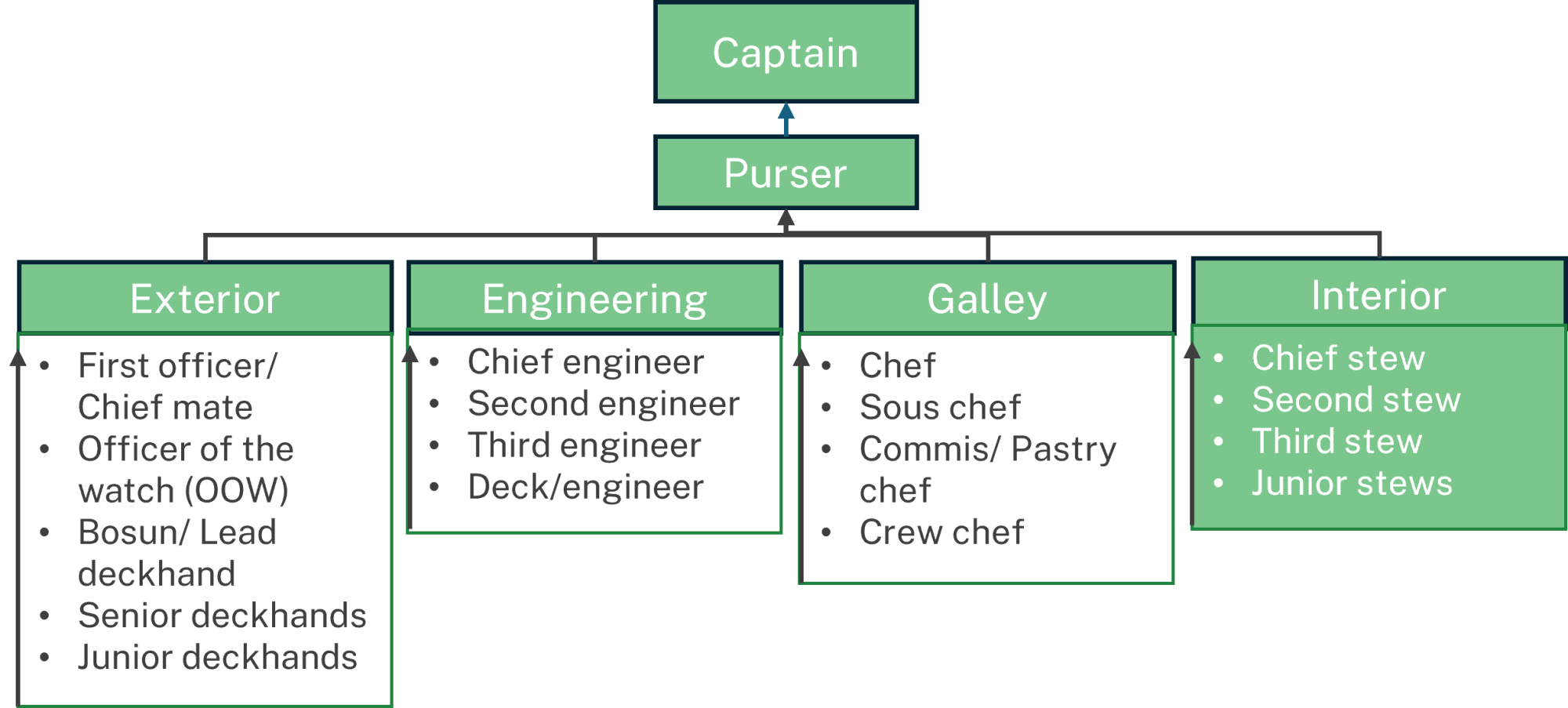
Command structure on a yacht – focus on the Interior department.
The interior emblem represents “Service with a smile.”
|

|
Purser
The purser is generally responsible for overseeing all operations of the interior department, such as inventory, purchasing and provisioning.
The purser position can be considered an onboard ‘concierge’. It is both guest-facing and uses a diverse set of skills to run the admin behind the scenes.
The purser handles the vessel's financial and administrative elements and supports the captain. They often manage the yacht’s accounts, help with paperwork, and may also
oversee the interior team, depending on the size of the vessel. The purser acts as the primary liaison between the yacht and onshore vendors, contractors, owners, and guests, and
therefore requires excellent communication, diplomacy, and organisational skills. They are responsible for guest and crew logistics, booking guest activities, and maintaining
smooth service delivery. Typically coming from a chief steward/ess background, a purser must have extensive knowledge of guest service, housekeeping, laundry care, and silver
service.
|

 |
Familiarity with fine wines, restaurants, and local entertainment options
relevant to the cruising area enhances the guest experience. A strong understanding of ISM (International Safety Management) and ISPS (International Ship and Port Facility
Security) protocols and advanced computer proficiency in programs like Microsoft Office and accounting software are essential.
The purser role has the highest authority in the interior department.
The
rank of purser is denoted by four bars with feathers or the "service with a smile" emblem on the epaulettes.
|
The purser position can be filled from any role and reports directly to the Captain.
|
Chief steward or stewardess
When the purser is absent, the chief stew could assume some of the purser’s responsibilities, including accounting, guest liaison, and ordering all beverages and speciality
items requested by guests. In this scenario, the chief stew would perform the purser role and run the interior department concurrently.
|

|
The chief stew is responsible for
scheduling duties for the interior crew. In this role, you are often the link between the captain and guests, and you will work closely with the chef on the menu, meal planning,
and timing. It is also your responsibility to maintain comprehensive backup provisions.
The chief stew works with the other department heads to ensure the vessel runs
smoothly for guests and crew alike.
The rank
of chief stew is denoted by three silver bars with a service with a smile
emblem on the epaulettes.
|
Second stew
|

|
The second stew is the chief
steward/ess’s deputy and is confident in guest service, provisioning, and interior organisation. They can step into the chief stew role when needed and often support junior crew
training, especially on larger vessels. In the absence of a strong second stew, a temporary chief may be brought in during the chief stew’s leave.
The rank
of second stew is denoted by two silver bars with a service with a smile
emblem on the epaulettes
|
Third stew/Junior stew
|

|
The third stew is typically responsible
for maintaining guest cabins and common areas, providing turn-down services, and handling laundry duties.
Junior stews are given clear instructions and
guidance on what jobs they perform. They are trained by the chief and second stew. As a junior stew you are responsible for: cleaning, laundry, ironing, cabin management, drinks
and basic service. You might be asked to assist the chef in the galley as and when needed. You may have some guest liaison but in general, this is left to the more senior interior
team members. Junior stews could also be required to help on deck and with docking procedures.
The
rank of third stew/junior stew is denoted by one silver bar with a service with a smile emblem on the epaulettes.
|
Learning Activity: Service with a smile
Career opportunities
Steward/ess to Chief Steward/ess
Working in the interior department offers a clear path for growth.
- Start as a steward/ess - You will focus on guest comfort, housekeeping, laundry, and
meal service, gaining hands-on experience in luxury hospitality.
- Grow with experience – As you build confidence, skills, and professionalism, you may be
trusted with more responsibilities, such as training junior crew or managing guest preferences.
- Advance to chief steward/ess – With proven leadership and strong organisational skills,
you can step up to lead the entire interior team. The chief steward/ess coordinates guest services, manages provisioning, and ensures the smooth running of all interior
operations.
Every task is a stepping stone - from turn-down service to team leadership—shaping your path to a senior interior role.
|
Pathway to purser: Climb from any department
The purser role is one of the most trusted positions on board. It manages the yacht’s finances, logistics, administration, and crew support.
Career crossover – With the right skills, individuals can transition into the purser role from any department. The key is a blend of
administrative expertise, attention to detail, and strong communication.
Experience matters – Ideal candidates typically have at least five years of superyacht experience and corporate or land-based
administrative experience.
To work as a purser, you will need:
- Financial management and administration skills.
- Crew management skills.
- Knowledge of maritime codes and laws (ISM and ISPS).
- Strong computer skills (Microsoft Office and accounting software).
- Communication skills to arrange logistics between vendors, contractors, owners/guests and crew.
- Vast knowledge of wines, food and on-shore activities.
Make the move – If you’re organised, professional, and ready for responsibility, the Purser path is a rewarding next step, no matter
where your yacht career began.
|
SUMMARY
You have learned about the interior department structure, the responsibilities of each role, and career growth opportunities.
- The purser requires a wide range of skills to perform the role.
- The chief stew is responsible for comfort and guest satisfaction on board.
- The second stew mainly performs guest service and is the deputy of the chief stew.
- The third and junior stews are responsible for cleaning, laundry and filling in where required in other departments.
|


