Introduction to Yachting / Module 2: Yacht Departments and Career Options
|
|
If the captain steers the ship, who keeps it moving? |
OBJECTIVE
The objective of this lesson is to elaborate on the engineering department. You will find answers to questions such as:
The engineering department on a yacht is responsible for maintaining all technical and mechanical systems, ensuring the safety and functionality of the vessel at all times. This includes keeping engines, generators, electrical systems, air conditioning, water systems, and other essential components. This team is led by the chief engineer, with support from the second engineer. This department operates primarily behind the scenes but plays a crucial role in the yacht’s daily operations, guest comfort, and emergency readiness.
|
|
|
Welcome to the Engine Room – where the power lives
Due to the demanding nature of their work, yacht engineers often follow a rotational schedule, typically two or three months on board, followed by an equal time off. The number of engineers aboard a yacht depends on size, technical complexity, regulations, and operational needs.
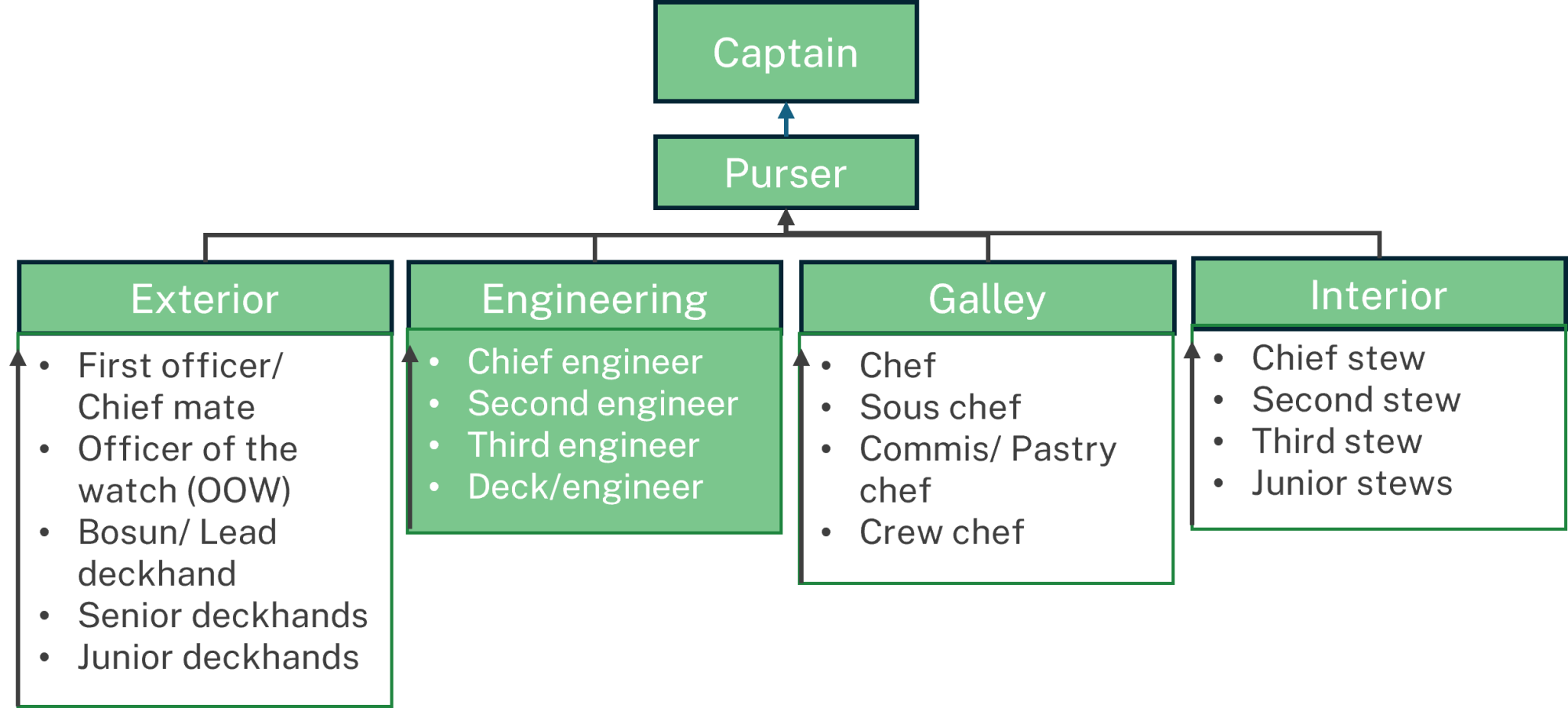
Like all departments on board, the engineering team operates within a defined rank structure, from the engine room to the bridge. Here’s how the engineering department fits into the overall chain of command.

Command structure on a yacht – focus on the Engineering department.
|
|
Although the chief engineer reports to the captain and carries nearly equal responsibilities, the ultimate authority remains with the captain. The chief engineer oversees all major machinery on board the vessel. They oversee all ancillary equipment such as air conditioners, water makers, fridges, pumps, tanks etc. They are also responsible for loading and distributing fuel and water to keep the vessel in trim. In summary, the chief engineer is responsible for the overall maintenance of the vessel to ensure it is safe. The rank of chief engineer is denoted by four gold bars with a propeller on the epaulettes. |
|
|
The second engineer reports to the chief engineer and will stand in for the chief. They perform engine room watches and will assist the chief engineer in all aspects of the job. The rank of second engineer is denoted by three gold bars with a propeller on the epaulettes. |
|
|
The third engineer assists the second and chief. The rank of third engineer is denoted by two gold bars with a propeller on the epaulettes. |
|
|
The deck/engineer plays a dual role of working in both engineering and exterior departments. This role reports to and works with the third engineer and helps in the engine room if required. The rank of deck/engineer is denoted by one gold bar with a propeller on the epaulettes. |
Yacht engineers are responsible for the maintenance, repair, and operation of the yacht's mechanical, electrical and support systems. Starting as an engineering assistant or junior engineer, you can progress to become a chief engineer, overseeing the entire engineering department and ensuring the smooth functioning of the yacht's systems.
To join the engineering department, you need:
Engineers onboard vessels obtain valuable skills that can also be transferred to land-based career options such as yacht design, consulting and education.
In closing, as an engineer on a yacht, you're more than a mechanic — you're the heartbeat of the vessel. Everything depends on your skill and focus, from power and propulsion to water systems and daily operations. Engineering could be your perfect path at sea if you love problem-solving, working with your hands, and keeping things running smoothly behind the scenes.

SUMMARY
In this lesson, we have learned: