
Introduction to Yachting / Module 3: Onboard Professionalism and Well-being
Lesson 2: Onboard code of conduct
|
|
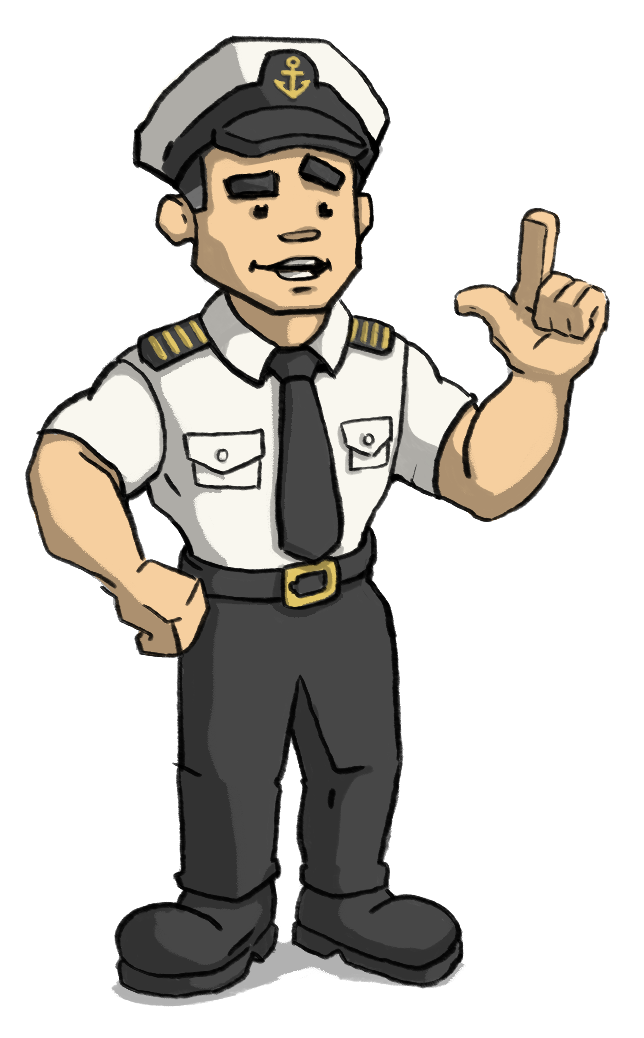
Can you recall a time when your attitude influenced the mood of a team - positively or negatively?
|
|
OBJECTIVE
This lesson is divided into four main sections that cover how to conduct yourself on the vessel. Learn about:
- Developing a good dynamic with the crew,
- Maintaining professional conduct with guests,
- Personal behaviour, and
- Your duty and safety responsibilities onboard.
|
Crew members should always conduct themselves with professionalism and integrity. This includes adhering to the yacht's policies and procedures, respecting hierarchy and chain
of command, and presenting yourself in a tidy and well-groomed manner. Maintaining a positive attitude and a willingness to go above and beyond in serving guests and colleagues
helps create a professional atmosphere onboard.
1. Healthy crew dynamics
Healthy crew dynamics are vital on a yacht because they foster teamwork, reduce stress, and create a more enjoyable living and working environment. When crew members
communicate effectively and support one another, tasks are completed more efficiently, safety is improved, and the overall atmosphere is positive. This enhances the guest
experience and helps with crew retention and well-being.
Build relationships with your fellow crew
Living and working with the same people in a small space may be difficult. Prepare yourself for working in confined spaces alongside other crew members, who may be very
different from you. Bonding can make a big difference when it comes to living and working together as a team. Connecting over shared hobbies or interests, rather than work, can
ease tension, make life on board more enjoyable, and increase a sense of well-being.
Forming friendships with the crew and maintaining good relationships on board can benefit you in your daily work-life and can ensure your job’s longevity.
Put yourself in other people’s shoes
Life on a yacht means working long hours in tight spaces with the same people every day, which can be both rewarding and challenging. It is important to be able to put yourself
in someone else’s shoes and approach each interaction with empathy. The long hours, stress, and lack of personal space can wear people down, and even the most positive
personalities can have bad days. If a crewmate seems distant or irritable, try not to take it personally. Instead, ask if they’re okay or simply offer a listening ear. Sometimes,
just giving someone a chance to vent can ease tension and make life onboard more manageable for everyone. Keeping an open mind and having compassion go a long way in building a
strong, supportive crew.
Five tips for showing empathy.

Take some me-time/alone time
Taking time for yourself while working on a boat can make a world of difference in a stressful situation. You should recognise when you require some “me” time or alone time and
don’t hesitate to take it, if you can. This might mean declining a group activity, going for a walk alone, reading a book, meditating, enjoying a solo coffee break, or simply
unplugging from devices and social media for a while.
The result of taking personal time is a more positive attitude towards work, the environment and the crew. Communicate your need to everyone in a non-judgmental manner, to help
the crew understand your behaviour.
|
Taking time for yourself helps you to recharge, reflect, and manage stress.
|

|
Onboard politics
Onboard politics refers to the informal power dynamics and social pecking order that exist among crew members. Begin your new position quietly, keep a low profile, and focus on
your job. Remember, everyone will be watching you, and not everyone will want to be your friend. It is much like the politics of the schoolyard or in the workplace, where is an
existing hierarchy, so be careful. It is wise not to become involved in gossiping about other crew members behind their backs, or complaining about any aspects of your previous
employment, or the current position.
Vessel politics create tension within the team, leading to poor communication, low morale, and a drop in performance and guest service.
Stir the pot in the galley, do not stir with the crew.
|

|
2. Professional conduct with guests
When interacting with guests, always conduct yourself with professionalism, discretion, and respect, maintaining clear boundaries and prioritising guest comfort and
privacy.
Maintain boundaries with guests
Working on a superyacht requires you to follow the same professional standards as any other job. Being polite and friendly with guests is fine, but it should never become
personal. Romantic relationships with guests are not acceptable and must be avoided. While friendships and relationships between crew members do develop, it is important they
remain discreet, respectful, and do not interfere with professional duties. These relationships should ideally be pursued during time off ashore.
Set boundaries and maintain them, and you shouldn’t have a problem. However, if you cross the line, there are harsh consequences, including:
- Immediate dismissal from your position.
- Damaged reputation within the yachting industry (it's a small, tight-knit community).
- Loss of references, making future employment difficult.
- Legal issues, depending on the guest’s status or contractual terms.
- Tension among the crew, affecting team dynamics and overall guest service.
Confidentiality
Crew members often have access to sensitive information about guests and yacht operations, so it’s important to maintain a high level of discretion and professionalism. As a
general guideline, avoid discussing private matters with anyone outside the crew, and be mindful of what you share online. For the safety and privacy of high-profile guests, it’s
best not to post content that reveals the yacht’s location, itinerary, your uniform, or identifiable features of the vessel on social media.
You will sign a confidentiality contract or a non-disclosure agreement when you are hired on a vessel. Make sure you know the content and details of this contract, as each
vessel may have different confidentiality requirements. Breaking confidentiality can result in disciplinary actions and legal ramifications.
On the other hand, a confidentiality agreement cannot and should not be used to silence victims or protect perpetrators. If you ever feel uncertain about your rights, don’t
hesitate to seek appropriate legal advice or speak with your Designated Person Ashore (DPA) for guidance and support.
3. Personal behaviour
Your behaviour and attitude have a direct impact on the people around you. At the start of the lesson, the Captain asked if you had noticed how your attitude can influence
others. Did you bring positive energy or add to the negativity? Every crew member plays a part in creating a respectful, professional, and positive work environment. It’s not
optional, it’s part of the job.
Appropriate behaviour and attitude
Maintaining appropriate behaviour and attitude is essential for creating a positive and professional atmosphere onboard a yacht. Crew members play a crucial role in ensuring
the safety, comfort, and enjoyment of guests, and their conduct reflects the reputation of the yacht and its crew. These four elements can help you behave appropriately while
working onboard.
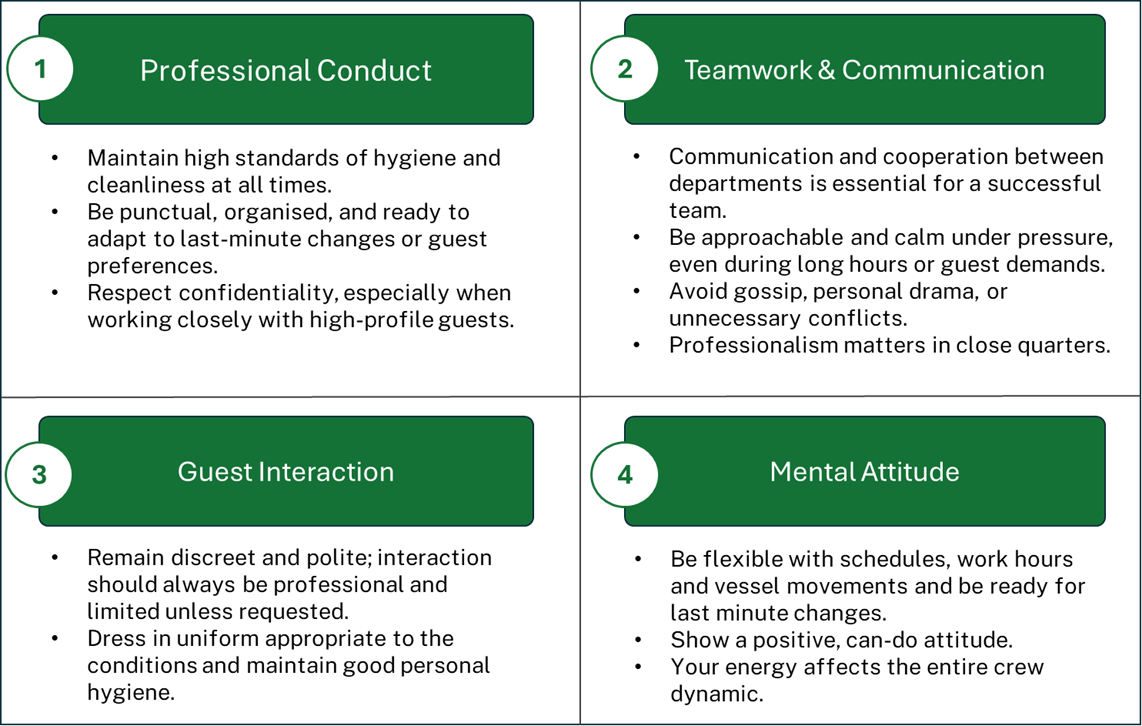
Always show respect
This is fundamental in all interactions onboard, whether with guests, fellow crew members, or superiors. Crew members should show respect for personal boundaries, cultural
differences, and diverse backgrounds. Respect also extends to the yacht itself, its equipment, and the marine environment.
Be adaptable
Life onboard a yacht is dynamic and unpredictable, requiring crew members to be adaptable and flexible in their approach to work. They should be prepared to handle changing
circumstances, unexpected challenges, and long hours with resilience and a positive attitude. Adaptability also involves being receptive to feedback and continuously seeking
opportunities for improvement.
Learning Activity: Welcome to ‘A day in the life of Sam’!
In this interactive scenario, you will encounter three opportunities to demonstrate empathy and professionalism. For each situation, choose the action you think is most
appropriate. After each choice, you will receive personalised feedback to help you refine your approach for real-life situations like these.
4. Duty and safety responsibilities
Safety is the highest priority on a vessel. Every crew member is responsible for the safety of the crew, guests, the vessel and the environment. You will be expected to perform
your assigned duty.
Duty watch
Depending on the vessel, individuals from the crew will be on watch duty every day. The responsibilities may also vary from one yacht to another. A ‘Duty watch’ list will be on
a crew notice board outlining the duties to be performed and when. The first mate, or appropriate crew member (depending on the vessel size) will go over this with the new crew
member during their induction, along with the vessel’s standing orders and any other important crew-related notices. All relevant crew information will be displayed on the notice
board.
In addition to these duties, you will also be required to turn lights on/off at the end of the night, answer the phone and doorbell, lock the boat and stay on it, essentially
keeping watch. At all times, the watch keeper should be in uniform.
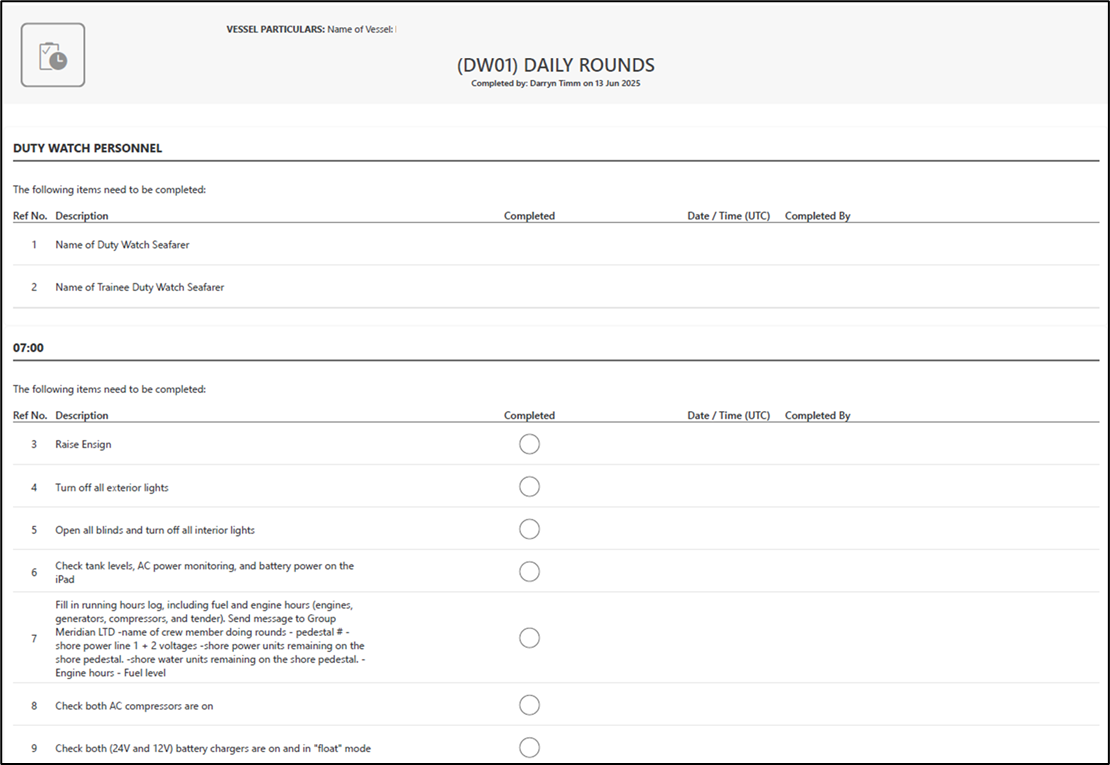
Example of a duty watch checklist.
Muster and drills
Each yacht will have a structured procedure for incidents onboard. Each crew member will have specific roles to play in each circumstance. Know your role and be ready. Refer to
the example muster list below to become familiar with the details and information. Muster lists should be in visible areas and easy to read.
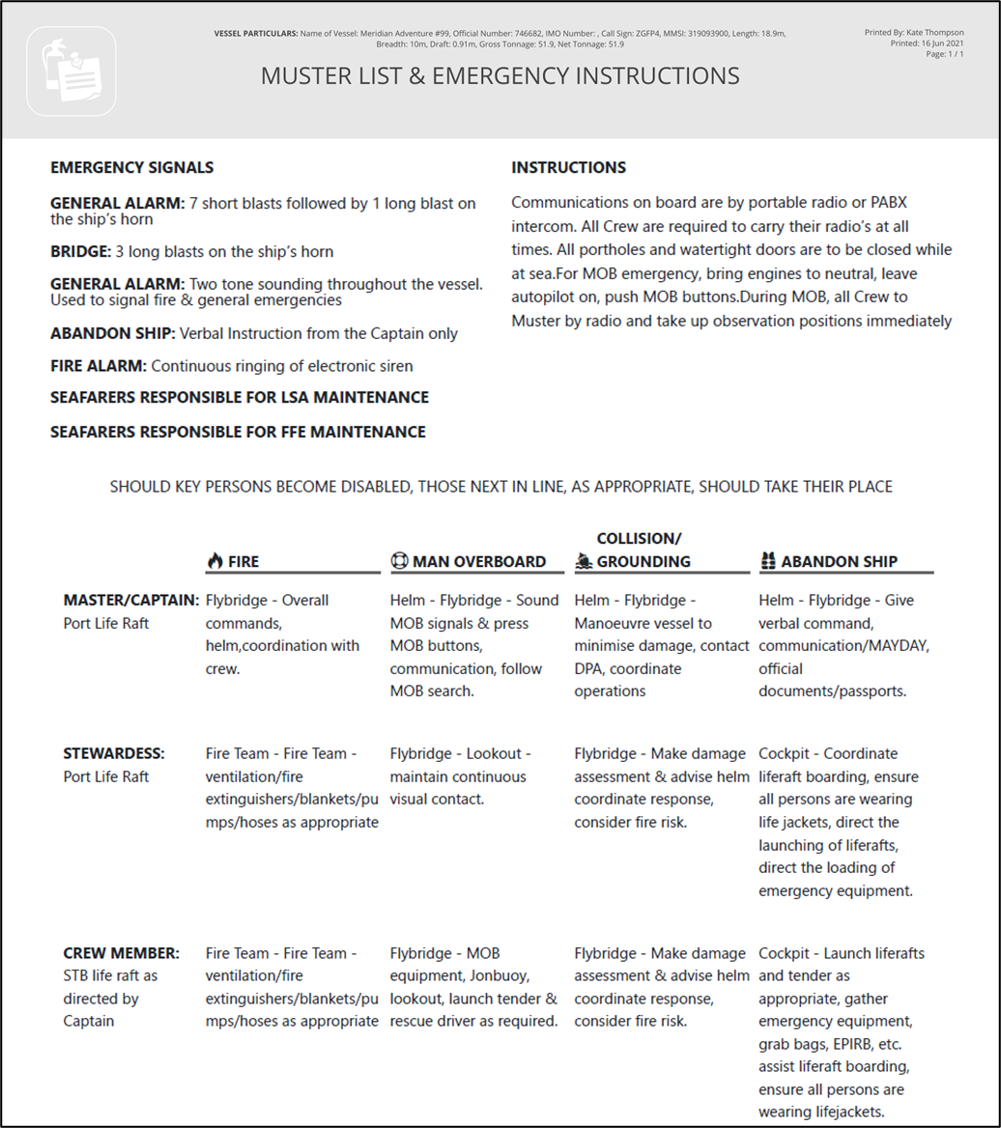
Example of a muster list.
Emergency preparation
From the get-go, make sure you’re prepared for an emergency. It might seem unlikely when things are running smoothly, but as a crew member, you have your own life as well as
the lives of the crew and guests in your hands. Thanks to your safety training, you should already know the safety procedures on board. If you're unsure, it's a good idea to
schedule another drill soon.
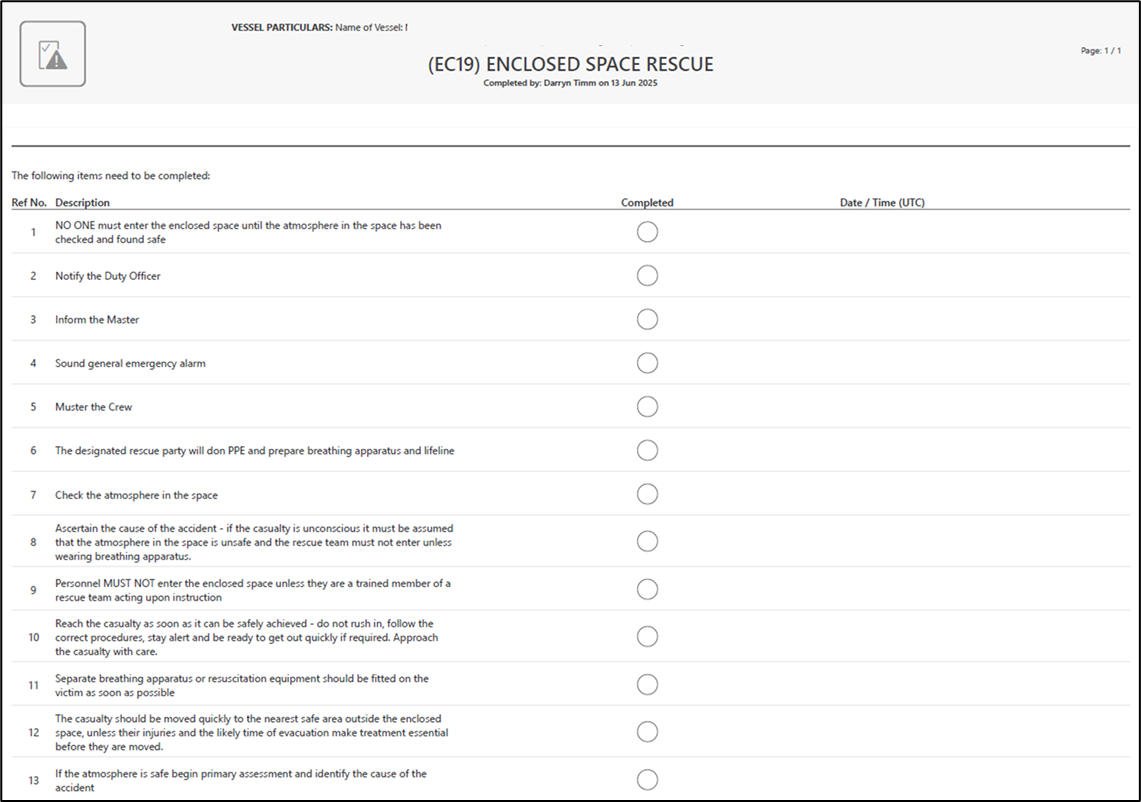
Example of emergency checklist.
|

Emergency drill - abandon ship.
|

Emergency drill – rescue from enclosed spaces.
|
|
Know your duty watch responsibilities, emergency roles, and onboard safety procedures from day one, to stay
safe.
|
!
|
|
SUMMARY
In this lesson, you have learned:
- The importance of good crew dynamics, and some tips to build empathy
- How to maintain professional conduct with guests,
- That your behaviour can and will affect the crew, so be responsible with your attitude, and
- What safety responsibilities you should expect to fulfil onboard.
|


